Is Cuban Coffee Stronger? Caffeine vs. Intensity
Ask anyone who drinks it and they will tell you Cuban coffee is strong. Stand at a ventanita at seven in the morning and it certainly behaves that way. But “strong” is doing two different jobs in that sentence, and separating them explains a lot about why a cafecito tastes the way it does.
Strength is two different things
When people say a coffee is strong, they usually mean one of two things without distinguishing between them.
Concentration is how much coffee is dissolved in how much water. A cafecito is very concentrated: a small volume of liquid carrying a lot of extracted coffee. That is what hits your tongue as intensity.
Caffeine is a separate measure, and it does not track concentration the way most people assume. A drink can taste powerful and carry less caffeine than a mug of something mild.
Cuban coffee is unambiguously the first. The second is where the surprise is.
The caffeine answer
A single cafecito is a small pour, roughly an ounce. An ounce of Cuban espresso carries somewhere in the region of 60 to 80 milligrams of caffeine, depending on the blend, the grind and how long the cafetera ran.
A standard eight-ounce cup of American drip coffee lands around 95 milligrams.
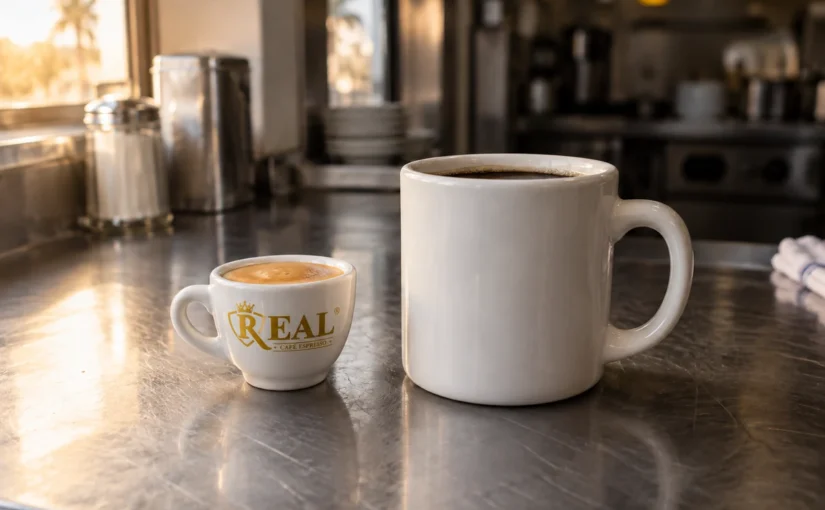
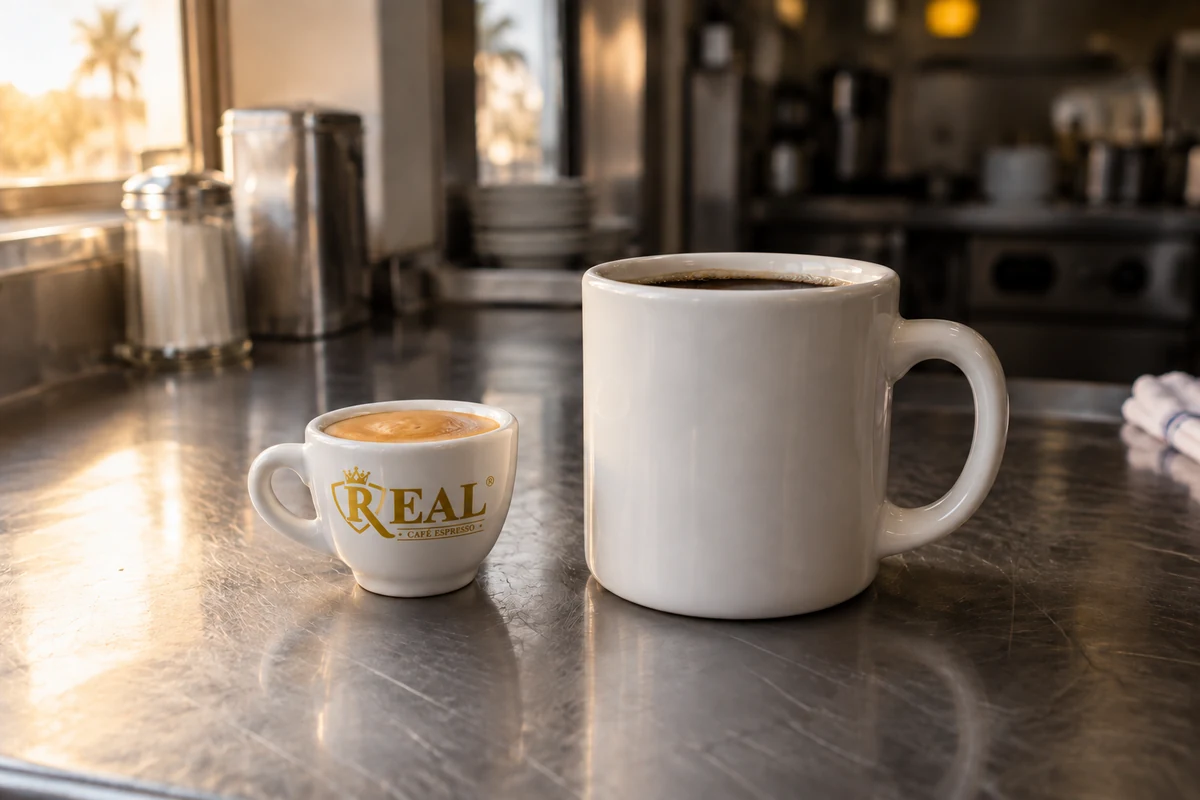
So the mug of drip coffee, which nobody describes as strong, usually carries more total caffeine than the cafecito that everybody does. The cafecito simply delivers its caffeine in a tenth of the volume, all at once, which is a different experience entirely.
The picture changes with a colada. A colada is a whole cafetera poured into one cup and shared, so the total caffeine is several cafecitos’ worth. Drink one alone and you will feel it. That is not the tradition, though. A colada is meant to be poured out into the little cups and passed around.
Why it tastes stronger than it is
Three things push the perception well past what the caffeine alone would explain.
The roast. Cuban espresso is roasted dark. A dark roast develops the heavy, low notes, cocoa, caramel, toasted sugar, and sheds the bright acidity of a lighter roast. Those low notes read on the palate as depth and weight. It is worth knowing that darker roasting does not add caffeine; if anything the longer roast drives off a fraction of it. Dark roast tastes stronger and is, very slightly, not.
The brew method. A cafetera pushes pressurized steam through finely ground coffee, producing a concentrated brew closer to espresso than to filter coffee. Less water, more dissolved coffee, more intensity per sip.
The sugar. This is the one people miss. Sugar in a cafecito is not stirred in afterwards; it is whipped into the first drops of espresso to make the espumita, then the rest of the coffee pours through it. That builds sweetness into the body of the drink rather than laying it on top. Sweetness and bitterness sharpen each other, and the result reads as more intense than either would alone.
So is it stronger?
By concentration, yes, and by a wide margin. By caffeine per serving, a single cafecito is usually behind a full mug of drip coffee, because the serving is so much smaller.
Which is the honest answer to a question that is really about something else. Nobody drinks a cafecito to consume caffeine efficiently. They drink it because an ounce of it carries more flavor than a mug of most things, because it takes ninety seconds standing at a window, and because handing one to someone is how a conversation starts.
A practical note
If you are managing your caffeine, count servings rather than judging by taste. Two cafecitos through a morning sit in roughly the same range as a large drip coffee. A colada drunk alone is a different proposition and is not how it is meant to be taken.
And if you want the intensity without as much caffeine, a cortadito cuts the same espresso with warm milk. The concentration comes down, the character stays. There is also decaf, which keeps the dark roast and the espumita and takes the caffeine out of the equation.
Ready to taste the difference?
Shop Café Real whole bean and ground espresso — trusted by 1,000+ locations across the US.
Shop Now→