What Is Espumita? The Secret to Authentic Cuban Espresso

If you’ve ever ordered a cafecito at a Miami ventanita and noticed a thick, golden foam sitting on top of the espresso — that’s espumita. It’s not a garnish. It’s not optional. It’s the defining feature of authentic Cuban espresso, and making it well is the difference between a good cafecito and a great one.

What Is Espumita?

Espumita — Spanish for “little foam” — is a dense, caramel-colored foam made by whipping sugar with the first few drops of freshly brewed espresso. The result is a thick, glossy paste that gets poured back into the rest of the coffee, creating a layered drink with a sweet, creamy top and a bold espresso base underneath.

It’s not steamed milk. It’s not whipped cream. It has no dairy in it at all. Espumita is made entirely from sugar and coffee — and the technique is everything.

Why Espumita Matters

Espumita does more than sweeten the coffee. When made correctly, it changes the texture and flavor of the entire drink. The whipping process introduces air into the sugar and coffee mixture, creating a foam that’s stable enough to sit on top of the espresso without dissolving immediately.

That foam acts as a buffer — slowing the release of bitterness, rounding out the flavor, and giving the cafecito a richness that simply stirring in sugar never produces. A cafecito with proper espumita tastes smoother, fuller, and more complex than one without it.

It also tells you something about who made it. A thick, golden espumita on top of your cafecito means someone took the time to do it right.

What You Need

Coffee: A dark roast Cuban espresso blend, brewed strong. The first drops need to be concentrated — watery coffee won’t produce good espumita.
Sugar: White granulated sugar. The ratio matters more than the brand.
A small cup or container: Something narrow that lets you whip efficiently.
A spoon: A small teaspoon works best.

The Sugar-to-Coffee Ratio

Getting the ratio right is the most important part. Too much sugar and the espumita becomes grainy and heavy. Too little and it won’t hold its structure.

The standard starting point: 1 teaspoon of sugar per shot of espresso. For a full cafecito (2 shots), use 2 teaspoons. Adjust to taste once you’ve made it a few times — some prefer it sweeter, some less so.

The key is that the sugar goes in first, before most of the coffee is brewed.

How to Make Espumita: Step by Step

Step 1 — Set up your cup. Place your small whipping cup next to the moka pot or espresso machine before you start brewing. Have your sugar measured and ready.

Step 2 — Catch the first drops. As soon as the espresso begins to flow — the very first dark drops — redirect them into your whipping cup. You want about 1 to 2 teaspoons of espresso for 2 teaspoons of sugar. These first drops are the most concentrated part of the brew and essential for good espumita.

Step 3 — Add the sugar immediately. Pour your measured sugar into the cup with the first drops of espresso. Work quickly — you want to start whipping while the coffee is still hot.

Step 4 — Whip. Using a small spoon, whip the sugar and coffee together vigorously in a circular motion. Keep going. The mixture will look dark and grainy at first, then begin to lighten and thicken. After 1 to 2 minutes of consistent whipping, it should turn pale golden, thick, and creamy.

Step 5 — Pour the rest of the espresso. Let the remaining espresso finish brewing into a separate cup, then slowly pour it over the espumita. The foam will rise to the top. Serve immediately.

Common Mistakes to Avoid

Using too much coffee in the whipping stage. The espumita needs to be paste-like before you pour the rest of the espresso in. If you add too much coffee at the start, the mixture stays too liquid to whip into foam.

Not whipping long enough. Espumita takes patience. If it looks dark and grainy, keep going. The color change from dark brown to pale gold tells you it’s working.

Using weak coffee. Espumita only works with a strong, dark roast espresso. A light roast or drip coffee doesn’t have the concentration or the crema needed to bind with the sugar properly.

Letting it cool before whipping. Heat is what activates the process. If you wait too long to start whipping, the mixture cools down and the sugar won’t emulsify properly. Start immediately.

Tips for Getting It Perfect Every Time

Use a narrow container. A small shot glass or espresso cup works better than a wide bowl — the narrow shape lets you build friction and volume faster.

Practice the pour. Catching just the first drops takes timing. After a few attempts, you’ll know exactly when to redirect the flow.

Taste and adjust. The sugar ratio is a starting point, not a rule. Cuban espresso is personal — adjust to what tastes right to you.

The right coffee makes it easier. A properly dark-roasted Cuban blend produces a first-drop concentrate that’s richer in oils and crema — exactly what bonds with the sugar to create stable foam. A grocery store dark roast often falls short here.

The Coffee Underneath It All

Espumita technique matters. But the coffee underneath it matters just as much. A well-made espumita on top of weak coffee still produces a weak cafecito. Start with a Cuban espresso blend that’s built for this style — dark, full-bodied, and strong enough to carry the sweetness.

Shop Café Real at AllCoffee.com — free shipping on orders over $100.
Cuban Espresso vs Italian Espresso: Two Cultures, One Obsession

Both start with finely ground coffee and pressurized hot water. Both produce something small, dark, and intensely concentrated. But Cuban espresso and Italian espresso are not the same drink — and the difference goes well beyond geography.

If you’ve ever had a cafecito at a Miami ventanita and wondered how it compares to the espresso you’d get standing at a bar in Naples, here’s the full breakdown.

They Start the Same Way

Cuban espresso and Italian espresso share the same basic method: hot water forced through tightly packed, finely ground coffee at high pressure. The result in both cases is a small, concentrated shot with a layer of foam on top.

That’s where the similarities end.

The Sugar Changes Everything

The defining feature of Cuban espresso isn’t the bean or the roast — it’s the sugar.

When making a traditional cafecito, the first few drops of espresso are caught separately and whipped with sugar until they form a thick, golden foam called espumita. The rest of the espresso is then poured on top. The result is a drink that’s sweet, dense, and layered — nothing like adding a sugar packet after the fact.

Italian espresso is served without sugar by default. Some drinkers add a cube at the bar, but the espresso itself is unsweetened. The flavor comes entirely from the coffee.

This single difference shapes everything: the texture, the ritual, the way it tastes, and the way it’s shared.

The Equipment

Italian espresso is machine-made — always. The pressure, temperature, and extraction time are precise and controlled. Specialty coffee culture in Italy has spent decades perfecting the variables.

Cuban espresso is traditionally made with a moka pot — a stovetop brewer that uses steam pressure rather than a pump. It produces coffee that’s strong and rich, though at lower pressure than a commercial espresso machine. Many Cuban households have used the same moka pot for generations.

That said, plenty of ventanitas and Cuban restaurants use commercial espresso machines today. The moka pot is tradition. The machine is convenience. The espumita is non-negotiable either way.

The Culture Around the Cup

In Italy, espresso is personal. You walk into a bar, order a shot, drink it standing at the counter in two minutes, and leave. It’s efficient, daily, and deeply embedded in the rhythm of Italian life.

In Cuba — and in Miami’s Cuban community — coffee is communal. A colada is a large portion of Cuban espresso brewed as a single pull and divided into small cups to share. You don’t drink a colada alone. You bring it to your coworkers, your neighbors, your family. The act of sharing is part of the drink itself.

This is why you’ll find ventanitas — walk-up coffee windows — all over Miami. They’re not just a way to get coffee. They’re a gathering point.

Which One Is Stronger?

Cuban espresso is typically sweeter and denser, while Italian espresso is more bitter and acidic. In terms of caffeine, they’re comparable — though Cuban blends often include Robusta beans, which carry more caffeine than Arabica.

Strength, though, is subjective. A straight Italian espresso from a quality roast can hit harder than a sweet cafecito. A well-made colada shared among four people means each person gets less caffeine than they might think.

What Cuban espresso delivers that Italian espresso doesn’t is richness — the sweetness of the espumita rounds out the bitterness and creates a flavor profile that’s distinctly its own.

The Bean Behind the Cup

Italian espresso blends vary widely by region and roaster. Northern Italian roasts tend to be lighter. Southern Italian roasts — Naples especially — go darker, producing the bold, slightly bitter profile most people associate with Italian espresso.

Cuban espresso traditionally uses a dark roast, often a blend of Arabica and Robusta. The dark roast reduces acidity and produces the heavy body that holds up to the espumita and the sweetness of the sugar.

Café Real Cubano uses a dark roast blend crafted specifically for this style — the crema is dense, the body is full, and the flavor stands up whether you’re making a cafecito for one or a colada for the whole office.

Two Traditions Worth Knowing

Italian espresso is a precision craft. Cuban espresso is a cultural ritual. Both deserve respect — and both are worth drinking.

If you’ve only had one, try the other. And if you want to make Cuban espresso at home the right way, start with the right coffee.

Shop Café Real at AllCoffee.com — free shipping on orders over $100.
How to Make a Cuban Colada at Home


Walk into any Cuban bakery in Miami and you’ll see it: a large styrofoam cup sitting on the counter with a cluster of small plastic cups arranged around it. Someone reaches over, fills each one, passes them around. No one asked. No one needed to. This is the colada — and the sharing is the whole point.

A colada isn’t just strong coffee. It’s a ritual. Understanding how to make one at home means understanding what it is first.

What Is a Cuban Colada?

A colada is a large portion of Cuban espresso — typically 4 to 6 shots — brewed as a single pull and served in one styrofoam cup with several small plastic cups (tacitas) on the side. It’s designed to be divided and shared. You pour a round, everyone drinks, and the conversation starts.

It’s the Cuban equivalent of a coffee pot in an office — but stronger, sweeter, and served with a lot more personality.

In Miami, coladas are the standard mid-morning and mid-afternoon break. They move through bakeries, construction sites, office break rooms, and ventanitas at a pace that tells you everything about the city’s relationship with coffee.

Why the Colada Is Meant to Be Shared

The ritual dates back to Cuban coffee culture, where coffee was the daily pause — the reason to stop working, gather, and talk. When Cuban exiles brought that culture to Miami in the 1960s, the colada came with it.

The small plastic cups aren’t just portion control. They’re an invitation. Pouring someone a tacita is an act of hospitality. Declining one is mildly unusual. Sharing a colada is how you take a break together.

At ventanitas across Miami — the walk-up windows that define Cuban coffee culture — coladas are ordered for groups. The server pulls the shot, pours the espumita, and sends it out with a stack of small cups.

What You Need

To make a colada at home, you need:

Cuban espresso coffee — the bean matters (more on this below)
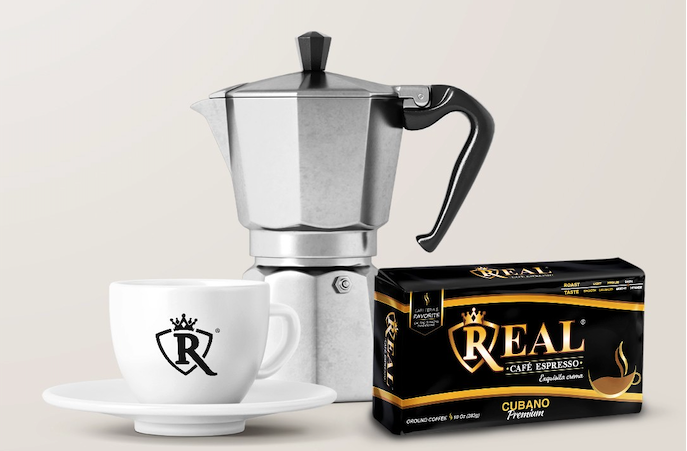
A moka pot — a stovetop espresso maker; a 6-cup moka pot is standard
Raw cane sugar — not white sugar, not brown sugar; turbinado or raw cane
A small bowl or cup for whisking the espumita
A spoon for whisking
A large cup to serve from
Small cups to share

No espresso machine required. The moka pot is the tool that built Miami’s coffee culture.

How to Make the Espumita

The espumita — the thick, pale foam that defines Cuban espresso — is the most important part of the process. It’s what separates a real colada from strong coffee with sugar stirred in.

Put 2–3 teaspoons of raw cane sugar in a small cup or bowl. When the moka pot starts to pull, catch the first few drops of espresso — just the first 10–15 seconds — and add them directly to the sugar. Stop the moka pot from pouring.

Whisk immediately and aggressively with a spoon. The goal is to turn the sugar and those few drops of espresso into a thick, light-colored paste. This takes 30–60 seconds of fast whisking. The mixture should go from dark and liquid to pale, thick, and creamy.

When your espumita looks like light caramel mousse, let the rest of the moka pot finish pulling. Pour the remaining espresso over the espumita and stir gently to combine.

How to Make a Cuban Colada: Step by Step

1. Fill your moka pot — water to just below the valve, coffee grounds tamped lightly in the basket. Use a medium-fine grind.

2. Start the pull — set it on medium heat. Watch for the espresso to start coming through.

3. Catch the first drops — as soon as espresso starts flowing, tilt the pot to pour the first 10–15 seconds into your sugar bowl. Let the rest pull into your serving cup.

4. Whisk the espumita — vigorously, immediately. Don’t wait. The heat helps the foam form.

5. Combine — pour the espresso over the espumita. Stir once, gently.

6. Pour into tacitas — divide into small cups. Serve immediately. Colada waits for no one.

Tips for Getting It Right Every Time

Don’t over-extract. Use medium heat, not high. Let the moka pot build slowly.

Whisk fast and early. The espumita forms best when the drops are still hot. If you wait, it won’t foam properly.

Use raw cane sugar. White sugar produces a thinner foam. The molasses in raw cane sugar is what gives espumita its body.

Share it. A colada drunk alone from a large cup isn’t really a colada. Pour it into small cups, even if it’s just two of you.

The Coffee Makes or Breaks It

A colada is only as good as the coffee you use. Cuban espresso requires a bean that can withstand dark roasting without turning bitter — one that produces a thick, rich crema under pressure and carries an aroma strong enough to fill the room.

Café Real uses a blend of Arabica and Robusta beans roasted to a deep, even dark. The Arabica brings complexity and natural sweetness. The Robusta brings the body and crema that the espumita technique needs to work. Together, they produce the full-bodied, balanced cup that’s been behind the counter at Miami’s most trusted bakeries and cafeterías for over 70 years.

For a colada that tastes like the real thing, the coffee has to be right.

Shop Café Real at AllCoffee.com →
Free shipping on orders over $100.

What is Cuban Espresso? A Guide to the Coffee That Defines Miami


Walk up to any ventanita in Miami and something happens that doesn’t happen at a coffee chain. A small plastic cup lands in front of you. The person across the counter doesn’t ask your name. There’s no size to choose. You get what everyone gets: a shot of dark, thick espresso topped with a layer of pale gold foam, sweet enough to feel like a small luxury, strong enough to carry you through the afternoon.

That cup is Cuban espresso — café cubano — and it’s one of the most culturally specific coffee experiences in the United States.

More Than a Drink — It’s a Ritual

Cuban espresso didn’t start as a menu item. It started as a way of life.

In Cuba, coffee was the punctuation of the day — the reason to pause, gather, and talk. When Cuban exiles settled in Miami in the 1960s, they brought that culture with them. They opened panaderías, cafeterías, and ventanitas — the iconic walk-up windows that became the social heartbeat of Little Havana, Hialeah, and eventually all of South Florida.

The drink stayed the same. Strong. Sweet. Served in small cups meant to be shared.

Today, Cuban espresso isn’t just a Miami tradition. It’s an identity. When Café Real set up in South Florida in 1954, the brand didn’t try to compete with the culture — it became part of it. For over 70 years, Café Real has been the coffee behind the counter at the city’s most beloved bakeries, cafeterías, and restaurants.

What Makes Cuban Espresso Different

At its core, Cuban espresso is a shot of espresso brewed from a dark roast coffee and sweetened during the brewing process — not after. That distinction matters more than it sounds.

The sugar — raw cane sugar — goes into the cup before the espresso pulls. The first few drops of hot espresso hit the sugar and get whisked together with a spoon until they form a thick, pale foam called espumita. The rest of the shot pours over it.

The result is something no amount of sugar stirred in afterward can replicate: a drink with caramel depth, a crema that holds, and a sweetness that’s woven into every sip rather than sitting on top.

The coffee itself matters just as much as the technique. Cuban espresso demands a bean that can stand up to dark roasting without turning bitter — a blend that delivers body, balance, and aroma rather than just heat and caffeine.

Café Real uses a carefully selected blend of Arabica and Robusta beans roasted to a deep, even dark. Arabica brings the complexity and the natural sweetness. Robusta brings the full body, the strength, and the thick, rich crema that’s the hallmark of a properly pulled Cuban shot. Together, they produce something full-bodied and balanced — with an aroma that fills the room before the first sip.

The Language of Cuban Coffee

One of the first things visitors to Miami discover is that ordering coffee requires a small vocabulary lesson. Cuban espresso isn’t a single drink — it’s a family of preparations:

Cafecito — A single shot of Cuban espresso, sweetened with espumita. The base of everything.

Colada — A larger portion of Cuban espresso served in a styrofoam cup with several small plastic cups on the side. It’s meant to be poured and shared — an act of community in a single order.

Cortadito — A cafecito cut with a small amount of steamed whole milk. Slightly mellower, still intensely flavored.

Café con leche — Espresso with a full pour of steamed milk, typically served with Cuban bread for breakfast. The Miami morning standard.

Each preparation has its moment. A cortadito after a long lunch. A colada passed between coworkers at 3pm. A café con leche with tostada on a Saturday morning.

Why the Bean Makes or Breaks It

Cuban espresso culture is exacting. Locals know immediately when a café is using the wrong coffee — the crema is thin, the body is flat, the sweetness doesn’t land. The beans carry the responsibility.

For generations, cafeterías and panaderías across South Florida have turned to Café Real as the standard they can depend on. It’s not branding — it’s the daily reality of 1,000+ locations across Florida that open every morning and reach for the same bag.

The Arabica-Robusta blend is calibrated for exactly this: a dark roast that holds up under pressure, produces the thick crema that espumita needs to form correctly, and carries the seductive aroma that makes a Miami cafetería feel like home the moment you walk in.

Cuban Espresso Beyond Miami

Cuban espresso has spent decades as South Florida’s best-kept secret — beloved by those who grew up with it, unknown to most of the country. That’s changing.

As Cuban culture earns wider recognition in American food media, the drink that’s been powering Miami since the 1950s is getting its moment. And for those who want to experience it without a flight to Miami, Café Real ships nationwide.

The coffee that’s been behind the counter at South Florida’s most trusted bakeries and cafeterías is available to brew at home — whole bean or ground, in the format that fits your kitchen.

Shop Café Real at AllCoffee.com →
Free shipping on orders over $100.